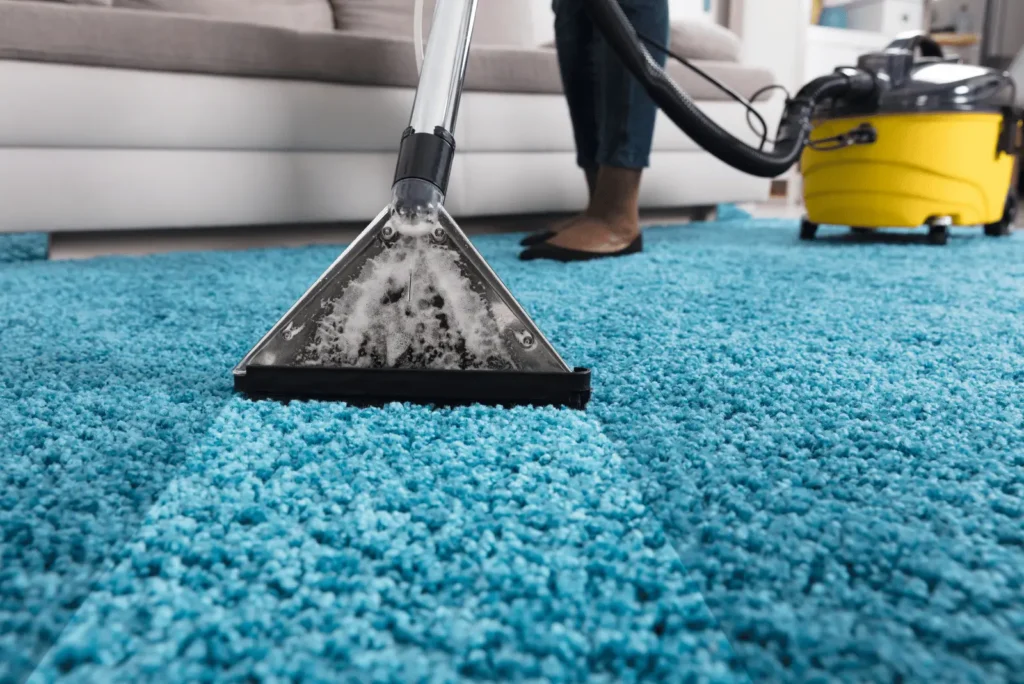
Indoor air quality is often discussed in relation to ventilation systems, open windows, or air purifiers, yet the condition of carpeted surfaces plays a far more consequential role than is commonly acknowledged. Carpets function as expansive reservoirs for airborne matter that settles gradually and invisibly over time. Dust motes, pollen grains, volatile particles, and microscopic debris descend from daily activity and become embedded deep within fibers. While vacuuming offers superficial relief, it lacks the penetrative efficacy required to dislodge compacted contaminants. Professional carpet cleaning services intervene at a structural level, restoring the carpet’s capacity to coexist with clean air rather than undermine it. Through advanced extraction processes and calibrated cleaning agents, these services reduce pollutant recirculation and contribute to a healthier interior atmosphere. The result is not merely aesthetic improvement, but a meaningful recalibration of the indoor breathing environment.
The Hidden Ecology Within Carpeted Surfaces
Carpets are often perceived as inert furnishings, yet they host a complex internal ecology shaped by human activity, ambient humidity, and environmental exposure. Fibers trap organic and inorganic matter alike, forming layered accumulations that remain undisturbed for extended periods. Skin cells, soil particulates, and environmental residue combine to create a substrate that influences indoor air composition. When disturbed by foot traffic or airflow, these embedded materials can reenter the air as fine particulates. Professional carpet cleaning disrupts this concealed ecosystem by accessing depths unreachable through routine maintenance. High powered extraction equipment agitates and removes entrenched debris, effectively dismantling pollutant repositories. This intervention interrupts the cyclical release of contaminants into the air, transforming carpets from passive pollutant sources into neutral surfaces that support improved respiratory conditions throughout enclosed spaces.
Particulate Capture and the Dynamics of Airborne Contaminants
Airborne contaminants rarely remain suspended indefinitely. Gravity and air circulation guide them downward, where carpets act as primary capture zones. This characteristic can be beneficial when managed correctly, yet detrimental when neglect prevails. Without periodic deep cleaning, carpets become saturated with particulates that compromise air clarity whenever movement occurs. Professional carpet cleaning services recalibrate this dynamic by removing accumulated matter before saturation thresholds are reached. Through controlled agitation and extraction, particulate density within fibers is dramatically reduced. This process limits the volume of material available for resuspension, thereby decreasing the concentration of inhalable particles in the air. The improvement is subtle yet pervasive, resulting in an environment where air feels lighter, odors dissipate more rapidly, and respiratory irritation becomes less frequent across daily activities.
Allergen Reduction Through Professional Extraction Methods
Allergens represent one of the most significant indoor air quality challenges, particularly in carpeted environments. Pollen, dust related allergens, and microscopic organic fragments become ensnared within fibers, where they persist despite surface cleaning efforts. Professional carpet cleaning services employ extraction methodologies designed to neutralize this issue at its source. Heated water, specialized solutions, and mechanical agitation work in unison to detach allergenic matter from fiber matrices. Once liberated, these particles are removed rather than redistributed. This thorough elimination reduces allergen reservoirs that would otherwise continue to influence air quality. The cumulative effect is an interior environment less prone to triggering respiratory discomfort, nasal irritation, or ocular sensitivity. Clean carpets therefore function as a preventative measure, supporting a more stable and breathable indoor atmosphere.
Moisture Control and the Prevention of Biological Proliferation
Moisture plays a pivotal role in indoor air quality, particularly when absorbed into carpeted surfaces. Spills, ambient humidity, and inadequate drying can introduce conditions favorable to biological proliferation. When moisture lingers, it can encourage the development of undesirable organic growth that releases particulate byproducts into the air. Professional carpet cleaning services address this risk through controlled moisture application and efficient extraction. Modern techniques emphasize rapid drying and precise water management, preventing residual dampness from persisting within fibers or padding. By removing both contaminants and excess moisture, these services disrupt conditions that compromise air integrity. The outcome is a cleaner carpet that does not contribute to musty odors or airborne irritants, reinforcing a healthier balance between surface hygiene and atmospheric purity.
Chemical Residue Management and Odor Neutralization
Household cleaning attempts often introduce chemical residues that remain trapped within carpets long after application. These residues can volatilize gradually, releasing compounds that affect indoor air quality. Professional carpet cleaning services mitigate this issue through measured solution use and thorough rinsing protocols. Specialized formulations are selected for efficacy without excessive residue, ensuring that cleaning agents do not become secondary pollutants. Additionally, professional odor neutralization techniques target the source of persistent smells rather than masking them. By extracting odor causing particles embedded deep within fibers, the air benefits from genuine freshness rather than temporary fragrance. This meticulous approach to residue management ensures that carpets contribute to a neutral and clean indoor environment, free from lingering chemical emissions.
Sustained Environmental Benefits for Residential and Commercial Spaces
The benefits of professional carpet cleaning extend beyond immediate improvements, offering sustained contributions to indoor air quality over time. Regular service intervals prevent contaminant accumulation from reaching problematic levels, maintaining carpets as supportive rather than detrimental elements within interior spaces. In residential settings, this translates to improved daily comfort and reduced respiratory strain. In commercial environments, it supports occupant well being and enhances perceived cleanliness. Clean carpets reduce the burden on ventilation systems by limiting particulate circulation, thereby promoting overall environmental efficiency. Through systematic maintenance, professional carpet cleaning services establish a foundation for healthier indoor air that persists across seasons, occupancy changes, and evolving environmental conditions.
About The Author